> ## Documentation Index
> Fetch the complete documentation index at: https://travel-info.co.zw/llms.txt
> Use this file to discover all available pages before exploring further.
# Gonarezhou National Park
> Explore Gonarezhou, Zimbabwe's second-largest national park. Remote wildlife safaris, the Chilojo Cliffs, and untouched wilderness in the southeast lowveld.
export const LocationMap = ({lat, lng, zoom = 12, title = "Location", showMarker = true, height = "400px"}) => {
if (!lat || !lng) {
return
;
};
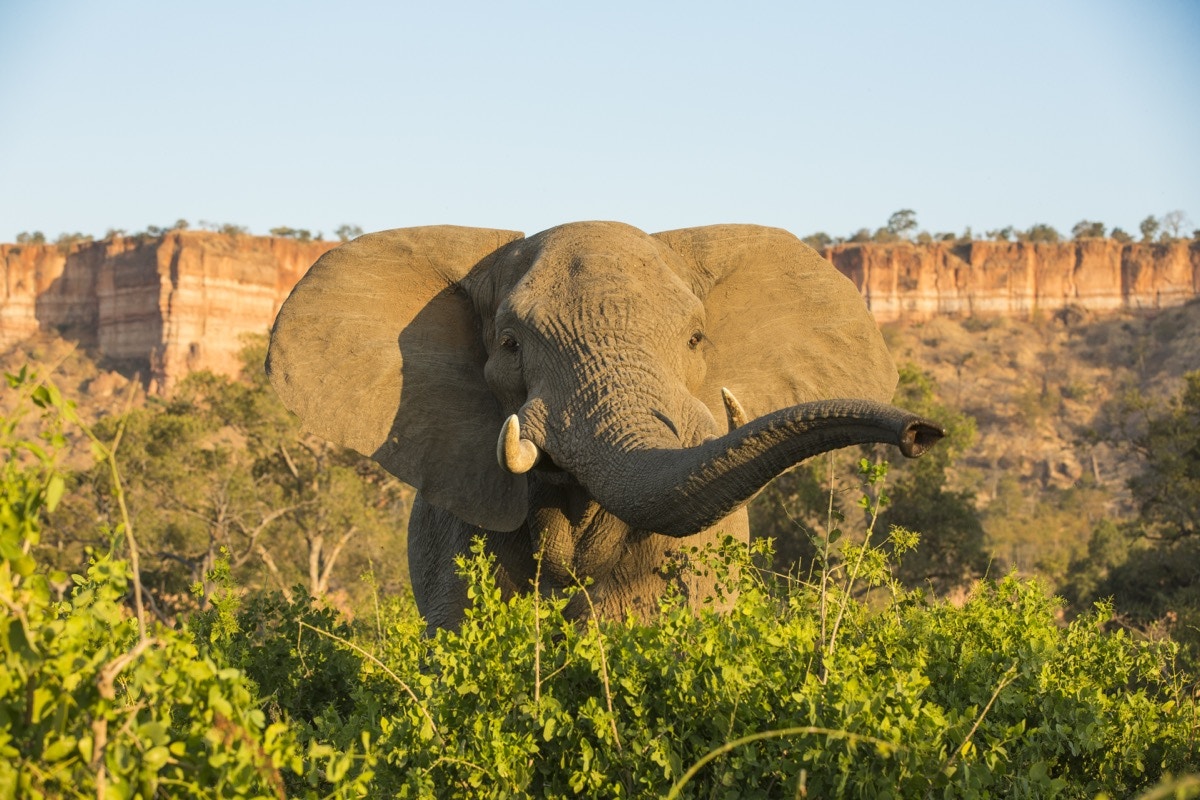
Gonarezhou National Park, meaning "Place of Many Elephants," is Zimbabwe's second-largest national park and one of its wildest frontiers. Located in the southeastern corner of the country along the Mozambique border, this 5,053 square kilometer (1,951 square mile) wilderness offers intrepid travelers a truly remote safari experience characterized by dramatic landscapes, diverse ecosystems, and relatively few visitors.
## Why Visit Gonarezhou
This off-the-beaten-path destination rewards adventurous travelers with:
* **Spectacular Chilojo Cliffs** - towering red sandstone formations
* **Large elephant herds** with distinctive reddish coloration from local soils
* **Three major rivers** - the Save, Runde, and Mwenezi
* **Pristine wilderness experience** with minimal tourist development
* **Rich biodiversity** with over 500 bird species and 11,000 elephants
* **Authentic wilderness feeling** largely unchanged for centuries
* **Pan-African conservation success story** through the Great Limpopo Transfrontier Park
* **Cultural connections** to the local Shangaan communities
## Landscape and Ecosystems
Gonarezhou features diverse habitats across its vast expanse:
**Chilojo Cliffs**
* Dramatic 180-meter-high red sandstone cliffs
* Stretch for over 20 kilometers along Runde River
* Formed by erosion over millions of years
* Spectacular views from both cliff tops and river bed
* Iconic sunset photography location
* Cultural significance to local Shangaan people
**Rivers and Floodplains**
* Three major rivers: Save, Runde, and Mwenezi
* Seasonal water flow creating dynamic ecosystems
* Sand rivers during dry season with underground water
* Lush riparian forests along permanent water sources
* Critical wildlife corridors and drinking points
* Hippo pools in deeper sections
**Mopane Woodlands**
* Dominant vegetation type covering vast areas
* Distinctive butterfly-shaped leaves turning golden in winter
* Important food source for elephants
* Mopane worms (caterpillars) - traditional food source
* Provides shade and habitat for diverse wildlife
**Sandveld and Bushlands**
* Mixed acacia and combretum woodland
* Open grasslands in Savé Valley
* Seasonal pans and wetlands
* Baobab trees dotting the landscape
* Diverse plant communities adapted to poor soils
* Specialized desert-adapted species
## Wildlife Highlights
The park's namesake and iconic residents:
* Population of approximately 11,000 elephants
* Distinctive reddish coloration from local soils
* Known for being wild and sometimes wary of vehicles
* Large tuskers still present in remote areas
* Important cross-border population with Mozambique
* Seasonal movements between river systems
* Conservation success story after historical poaching
**Best viewing:** Dry season along rivers and at waterholes
The full complement of large African carnivores:
* Lion: Healthy population throughout the park
* Leopard: Especially in riverine forests and rocky outcrops
* Cheetah: Small population in open areas
* Wild Dog: Important regional population
* Spotted Hyena: Common throughout
* Side-striped Jackal: Frequently seen at dawn/dusk
* Rare predators: Serval, caracal, and African wild cat
**Best viewing:** Early morning and late afternoon game drives
Notable wildlife unique or special to Gonarezhou:
* Nyala: Beautiful spiral-horned antelope in riverine areas
* Lichtenstein's Hartebeest: Uncommon antelope species
* Sharpe's Grysbok: Tiny, secretive antelope
* Yellow-spotted Rock Hyrax: On the Chilojo Cliffs
* Crested Guineafowl: In riverine forests
* Pel's Fishing Owl: Rare riparian specialist
* African Rock Python: Giant snakes near water sources
**Best viewing:** Specialized guided walks and night drives
Over 500 species make this a birder's paradise:
* Raptors: Martial eagle, bateleur, and fish eagles
* Waterbirds: Herons, storks, and kingfishers along rivers
* Carmine bee-eaters: Nesting colonies in riverbanks
* Ground hornbill: Endangered species with good population
* Migratory species: Present November-March
* Unique species: Racket-tailed roller, Bohm's spinetail
* Endemic races: Tropical boubou, grey-headed parrot
**Best viewing:** Year-round, with migrants November-March
## Activities and Experiences
Exploring by vehicle:
* Self-drive options for experienced safari-goers
* Guided game drives from lodges
* Full-day excursions with picnic lunches
* Night drives in certain areas (guided only)
* 4x4 essential on all park roads
* Track network follows rivers and key wildlife areas
* Chilojo Cliffs accessible by 4x4 track
**Note:** Self-drivers must be fully self-sufficient and experienced
On-foot exploration with armed guides:
* Guided walks from all lodges and camps
* Focus on tracking, ecology, and smaller details
* Intense, immersive wildlife encounters
* Routes along rivers particularly productive
* Specialized multi-day walking trails (seasonal)
* Experienced guides with firearms for safety
* Age restrictions (usually 16+)
**Note:** Among Zimbabwe's best walking territory
Visiting the park's most iconic landscape:
* Viewpoints from both above and below cliffs
* Guided walks along cliff bases
* Sunset photography from dedicated viewpoints
* Cultural interpretation of cliffs' significance
* Picnic spots with spectacular views
* Swimming in seasonal pools (guide approval needed)
* Archaeological sites with ancient paintings
**Tip:** Allow a full day to properly experience the cliffs
Connecting with local communities:
* Visits to Shangaan villages (arranged through lodges)
* Cultural performances and demonstrations
* Engagement with park's community outreach programs
* Crafts and traditional skills sharing
* Local guides sharing indigenous knowledge
* Interpretation of archaeological sites
* Community-owned accommodations and businesses
**Note:** Respectful engagement supports conservation
## Where to Stay
Accommodation options range from luxury to basic camping:
**Luxury Lodges:**
* **Chilo Gorge Safari Lodge**: Premier option overlooking the Save River
* Elegant rooms with river views
* Swimming pool and viewing deck
* Excellent guiding team
* Full-service luxury experience
* Price range: \$450-650 per person per night
* **Singita Pamushana Lodge**: Ultra-luxury in neighboring Malilangwe Reserve
* Exclusive private villa accommodations
* Access to both reserve and national park
* Premium service and amenities
* Significant conservation contributions
* Price range: \$1,500-2,500 per person per night
**Tented Camps:**
* **Gonarezhou Bush Camp**: Comfort in remote location
* Canvas accommodations along the Runde River
* Authentic safari experience with modern comforts
* Excellent location for wildlife viewing
* Focus on walking safaris
* Price range: \$300-450 per person per night
* **Gonarezhou Bushcamps Company**: Low-impact seasonal camps
* Mobile-style camps in prime locations
* Minimal environmental footprint
* Emphasis on wilderness experience
* Experienced guides leading activities
* Price range: \$250-350 per person per night
**Public Camping:**
* **Chipinda Pools**: Main Zimbabwe Parks campsite
* Basic facilities with ablution blocks
* Self-catering with no electricity
* Central location for park exploration
* Booking through Zimbabwe Parks
* Price: \$15-30 per person per night
* **Mabalauta**: Southern section camping area
* Simple facilities in remote location
* Access to different park ecosystems
* Less visited than northern sections
* Self-sufficient camping required
* Price: \$15-25 per person per night
**Special Accommodations:**
* **Fly Camps**: Temporary bushcamps for walking safaris
* Minimalist camping experience
* Mobile setup in remote locations
* Often part of multi-day walking itineraries
* Accompanied by professional guides
* Price: Usually part of package experiences
* **Community Lodges**: Supporting local development
* Varying levels of comfort and amenities
* Direct benefit to neighboring communities
* Cultural connections and local engagement
* Authentic hospitality experience
* Price range: \$50-150 per person per night
## When to Visit
Gonarezhou has distinct seasonal characteristics to consider:
**Dry Season (May-October)**
* **Weather**: Cool to hot days, cold nights, minimal rainfall
* **Wildlife**: Concentrates around permanent water sources
* **Landscape**: Sparse vegetation improves visibility
* **Access**: All park roads generally passable
* **Comfort**: Pleasant temperatures except October (very hot)
* **Considerations**: Peak visitor season (though still uncrowded)
* **Best for**: First-time visitors, wildlife viewing, photography
**Green Season (November-April)**
* **Weather**: Hot days, warm nights, afternoon thunderstorms
* **Wildlife**: More dispersed with water widely available
* **Landscape**: Lush vegetation, flowing rivers, wildflowers
* **Access**: Some roads impassable after heavy rains
* **Comfort**: High humidity, occasional heat discomfort
* **Considerations**: Fewer visitors, dramatic landscapes
* **Best for**: Bird watching, landscape photography, solitude
**Month by Month Highlights:**
* **April-May**: Transition season with pleasant temperatures
* **June-July**: Cool, clear days with excellent game viewing
* **August-September**: Increasing heat, peak wildlife concentration
* **October**: Extremely hot but exceptional wildlife viewing
* **November-December**: Early rains, dramatic skies, birth season
* **January-February**: Peak rainy season, lush but challenging access
* **March-April**: Rains easing, green landscapes, good birding
**Recommended Timing**: May-June for balanced experience, or September for serious wildlife enthusiasts willing to tolerate heat
## Getting There & Around
Gonarezhou's remote location requires planning:
**Access Routes:**
* **Northern Section (Chipinda Pools)**:
* From Harare via Masvingo & Chiredzi (550km, 7-8 hour drive)
* From Bulawayo via Masvingo (450km, 6-7 hour drive)
* From Great Zimbabwe (250km, 4 hour drive)
* **Southern Section (Mabalauta)**:
* From Harare via Beitbridge (650km, 8-9 hour drive)
* From Bulawayo via Beitbridge (500km, 7 hour drive)
**Transportation Options:**
* **Self-Drive**: 4x4 vehicle essential, especially in rainy season
* **Fly-In**: Charter flights to Chipinda airstrip from Harare/Buffalo Range
* **Guided Tours**: Safari operators provide transport from main cities
* **Transfers**: Some lodges arrange road transfers from nearby airports
**Getting Around Within the Park:**
* Extensive network of 4x4 tracks (720km)
* Self-drive permitted with appropriate vehicles
* Guided game drives from accommodations
* No public transportation within park
* GPS and detailed maps essential for self-drivers
* Some areas restricted to guided access only
**Road Conditions:**
* Main access roads: Reasonable condition, sedan possible in dry season
* Park internal roads: 4x4 necessary year-round
* Sandy river crossings in multiple locations
* Seasonal changes affect accessibility
* Reduced network usable during rainy season
* Fuel available in Chiredzi (last reliable source)
**Entrance Gates:**
* Chipinda Pools: Main northern entrance
* Mabalauta: Southern section entrance
* Limited operating hours (typically 6am-6pm)
* Advance arrangements needed for late arrivals
## Practical Information
* **Minimum**: 3 days to experience the core areas
* **Recommended**: 4-5 days to explore the park thoroughly
* **Extended**: 7+ days for comprehensive wilderness experience
**Suggested Allocation:**
* Day 1-2: Northern section and Chilojo Cliffs
* Day 3-4: Central riverine areas
* Day 5+: Southern section or specialized activities
**Clothing:**
* Neutral colors (khaki, olive, brown)
* Lightweight, breathable fabrics
* Long sleeves and pants (sun/insect protection)
* Warm layers for winter evenings (May-August)
* Wide-brimmed hat and sunglasses
* Sturdy walking shoes/boots
**Equipment:**
* Binoculars (essential for wildlife viewing)
* Camera with zoom lens and extra batteries
* Power bank (limited charging at camps)
* Flashlight/headlamp (powerful beam)
* Basic first aid kit with personal medications
* Insect repellent and sunscreen
* Water purification method for self-drivers
**Self-Drive Additions:**
* GPS and physical maps
* Satellite phone or emergency communication device
* Vehicle recovery equipment
* Spare tires and basic tools
* Extra fuel and water containers
* Complete camping equipment if needed
* **Park Entrance**: \$15-25 USD per person per day (international visitors)
* **Vehicle Fee**: \$10-15 USD per day
* **Camping Fee**: \$15-30 USD per person per night (public sites)
* **Fishing Permit**: \$10 USD (if applicable)
* **Special Activity Permits**: Variable for specific areas
**Payment Information:**
* USD cash accepted and preferred
* Some facilities now accepting mobile payments
* No credit card facilities at park entrances
* Accommodations may accept cards with surcharge
* Multi-day passes available at slight discount
* Conservation fees support anti-poaching efforts
**Within the Park:**
* No shops or fuel stations
* Limited basic supplies at main camps
* No reliable cell phone coverage
* No ATMs or banking services
* Medical facilities very limited or absent
**Nearest Supplies:**
* Chiredzi: Last major town for fuel, food, basic supplies
* Masvingo: Larger city with full services
* Lodges provide meals for guests
* Self-caterers must bring all supplies
* Water from park sources requires purification
## Conservation Story
Gonarezhou represents a remarkable conservation journey:
**Historical Challenges:**
* Severe poaching during Zimbabwe's economic difficulties
* Cross-border pressures from civil war in Mozambique
* Elephant population reduced dramatically in 1980s-1990s
* Limited infrastructure and management resources
* Human-wildlife conflict with surrounding communities
* Habitat fragmentation threatening wildlife corridors
* Drought impacts on water-dependent species
**Turnaround and Recovery:**
* Partnership with Frankfurt Zoological Society since 2007
* Gonarezhou Conservation Trust formed in 2017
* First co-management model for Zimbabwe national parks
* Intensive anti-poaching efforts with modern technology
* Community engagement through Chilojo Club and other initiatives
* Elephant population rebounded to 11,000+ individuals
* Reintroduction of locally extinct species
**Great Limpopo Transfrontier Park:**
* Massive cross-border conservation area established 2002
* Links Gonarezhou with South Africa's Kruger and Mozambique's Limpopo parks
* Creates 35,000 sq km wildlife habitat
* Allows natural migration patterns to resume
* Collaborative international conservation efforts
* Removal of some border fences to facilitate animal movement
* Joint anti-poaching operations between countries
**Community Involvement:**
* Revenue sharing with surrounding communities
* Employment opportunities in conservation and tourism
* Shangaan cultural heritage preservation
* Environmental education programs
* Sustainable resource use initiatives
* Conflict mitigation strategies
* Scholarship programs for local students
## Visitor Tips and Insights
Essential advice for independent travelers:
* Absolutely require 4x4 vehicle with good clearance
* Carry extra fuel, water, and food supplies
* Download offline maps before arrival
* Register travel plans with park authorities
* Travel in convoy of two vehicles if possible
* Carry recovery equipment and know how to use it
* Inform accommodation of expected arrival time
* Stay on designated roads and tracks
* Plan shorter daily distances than typical road travel
Making the most of excellent photo opportunities:
* Morning light on Chilojo Cliffs produces rich colors
* Bring telephoto lenses for wildlife (200-400mm ideal)
* Wide angle essential for landscape perspectives
* Dust protection critical for equipment
* Tripod useful for low-light river scenes
* Elevated vantage points at Chilojo offer dramatic views
* Request photography-focused guides if serious
* Low light conditions excellent along rivers
* Extra batteries essential as charging limited
Maximizing animal sightings:
* Early morning starts critical (5:30-6:00am)
* River confluences especially productive
* Patience at waterholes during dry season
* Scan tree lines for predators during heat of day
* Listen for alarm calls from impala and baboons
* Look for circling vultures indicating predator activity
* Allow time at Tembwahata Pan for spectacular sightings
* Elephants most active early morning and late afternoon
* Local guides know recent sighting patterns
Respectful engagement with local communities:
* Ask permission before photographing people
* Learn basic Shangaan greetings
* Support community-based tourism initiatives
* Understand the area's complicated colonial history
* Respect traditional customs and authorities
* Engage local guides for cultural interpretation
* Purchase crafts directly from artisans when possible
* Dress modestly when visiting villages
* Small gifts appreciated but not expected
## Specialized Experiences
Unique opportunities in Gonarezhou for special interests:
**Research and Conservation:**
* Participation in wildlife monitoring projects
* Volunteer opportunities with conservation trust
* Specialist guides for research interests
* Behind-the-scenes conservation work visits
* Presentations by research scientists at some lodges
* Citizen science programs during certain periods
* Conservation-focused photographic safaris
**Bird Watching:**
* Over 500 recorded species in diverse habitats
* Specialized birding guides available
* Rarities include Pel's fishing owl and Angola pitta
* Migratory species abundant November-March
* Riparian forests particularly productive
* Dedicated bird hides at some waterholes
* Multi-day birding itineraries available
**Wilderness Trails:**
* Multi-day walking expeditions between fly camps
* Remote area exploration with professional guides
* Limited departures during dry season only
* Maximum 6-8 participants per group
* High level of fitness required
* Authentic wilderness immersion
* Sleep under stars with minimal facilities
**Photography Safaris:**
* Specialist photo guides with technical expertise
* Vehicles modified for camera equipment
* Flexible timing for optimal light conditions
* Access to hides and special vantage points
* Small groups or private guides available
* Post-processing workshops at some lodges
* Focus on unique landscapes and wildlife
## Combining with Other Destinations
Natural combinations with Gonarezhou to create comprehensive itineraries:
**Southern Zimbabwe Circuit:**
* Gonarezhou National Park (4-5 days)
* Great Zimbabwe Monument (1-2 days)
* Matobo Hills National Park (2-3 days)
* Total recommended time: 8-12 days
* Logical route with manageable driving distances
* Combines wildlife, history, and landscapes
* Cultural and natural heritage focus
**Zimbabwe Comprehensive:**
* Victoria Falls (2-3 days)
* Hwange National Park (3-4 days)
* Matobo Hills (2 days)
* Great Zimbabwe (1-2 days)
* Gonarezhou National Park (3-4 days)
* Total recommended time: 12-16 days
* Covers major highlights across the country
* Significant driving distances or internal flights
* Complete wildlife and cultural experience
**Cross-Border Adventure:**
* Kruger National Park, South Africa (3-4 days)
* Gonarezhou National Park (3-4 days)
* Vilanculos/Bazaruto, Mozambique (3-4 days)
* Total recommended time: 10-14 days
* Diverse ecosystems and experiences
* Wildlife, wilderness, and beach combination
* Border crossings and logistics more complex
* 4x4 vehicle essential for entire route
**Specialized Wildlife Focus:**
* Mana Pools National Park (3-4 days)
* Matusadona National Park (2-3 days)
* Gonarezhou National Park (4-5 days)
* Total recommended time: 10-14 days
* Zimbabwe's premier wildlife destinations
* Different ecosystems and species focus
* Less visited, authentic wilderness experiences
* Challenging logistics but rewarding combination
***
## Explore Further
Complete guide to Gonarezhou's iconic 180-meter red sandstone cliffs - viewpoints, photography tips, and cultural significance.
Combine with a visit to Africa's greatest ancient monument on your southern Zimbabwe circuit.
Explore all of Zimbabwe's spectacular viewpoints and natural wonders.
Discover Zimbabwe's five UNESCO World Heritage Sites including Great Zimbabwe nearby.
***
**Gonarezhou Insider Tip**: The hidden gem of the park is the Tambohata Pan in the northern section, which is one of the few permanent water sources during the dry season. Arrive at dawn and position your vehicle patiently on the eastern side (for optimal light) to witness a parade of wildlife coming to drink throughout the morning. During peak dry season, you might see elephant herds, buffalo, various antelope species, and occasionally predators all within a few hours.
 Gonarezhou National Park, meaning "Place of Many Elephants," is Zimbabwe's second-largest national park and one of its wildest frontiers. Located in the southeastern corner of the country along the Mozambique border, this 5,053 square kilometer (1,951 square mile) wilderness offers intrepid travelers a truly remote safari experience characterized by dramatic landscapes, diverse ecosystems, and relatively few visitors.