> ## Documentation Index
> Fetch the complete documentation index at: https://travel-info.co.zw/llms.txt
> Use this file to discover all available pages before exploring further.
# Hwange National Park
> Plan your visit to Hwange National Park, Zimbabwe's largest game reserve. Safari lodges, elephant herds, best seasons, and how to book game drives.
export const LocationMap = ({lat, lng, zoom = 12, title = "Location", showMarker = true, height = "400px"}) => {
if (!lat || !lng) {
return
;
};
Covering over 14,600 square kilometers (5,800 square miles), Hwange National Park is Zimbabwe's largest wildlife reserve and one of Africa's premier safari destinations. Located in the northwest of the country, just a 2-hour drive from Victoria Falls, Hwange combines accessibility with an authentic wilderness experience.
## Why Visit Hwange
Hwange National Park offers a world-class safari experience with several distinctive features:
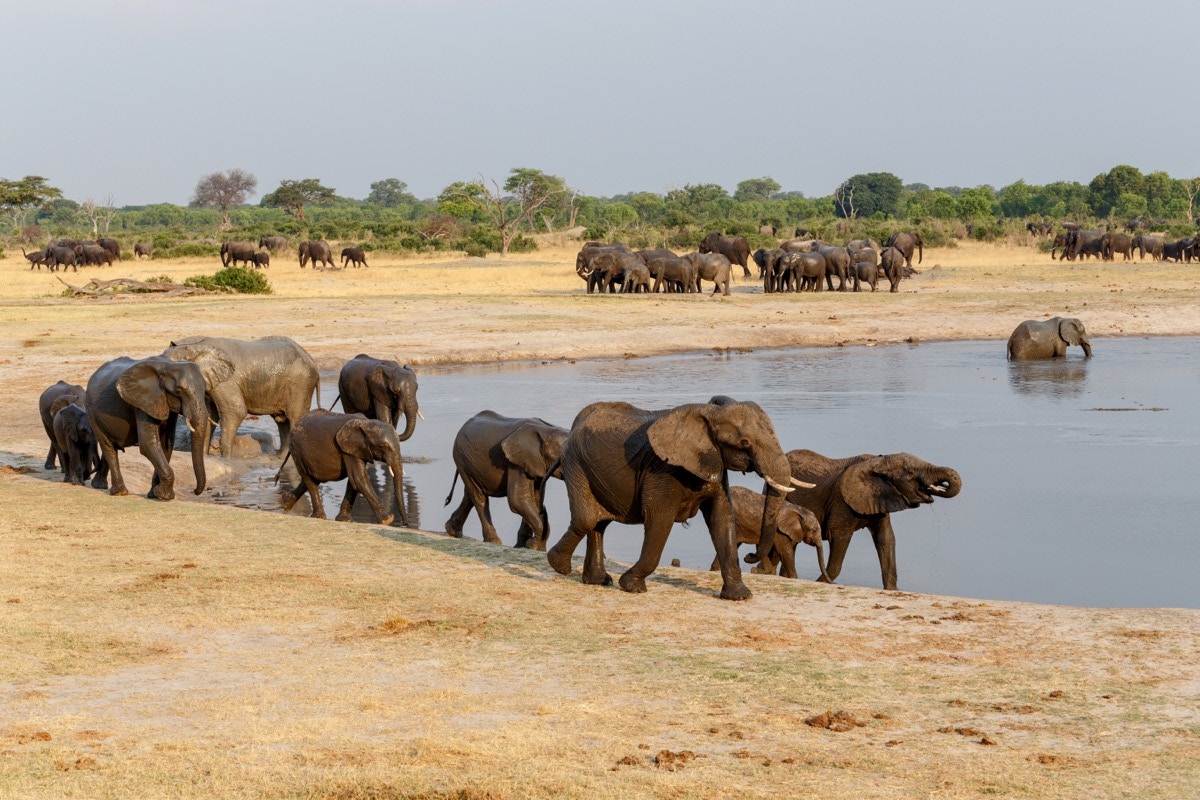
* **Massive elephant population**: Home to over 45,000 elephants, one of the largest concentrations in Africa
* **Diverse wildlife**: More than 100 mammal species and 400 bird species
* **Rich predator sightings**: Lions, leopards, cheetahs, and one of Africa's largest remaining wild dog populations
* **Varied landscapes**: From dense teak forests to open savanna and semi-desert scrub
* **Fewer crowds**: Compared to more famous parks in neighboring countries
* **Year-round waterholes**: Artificial pumped waterholes supplement natural pans, ensuring wildlife viewing even in dry season
## Wildlife Highlights
### Mammals
Hwange is renowned for its exceptional diversity of large mammals:
Hwange's most famous residents, with herds of 100+ gathering at waterholes during dry season. The park is known for its enormous elephant bulls with impressive tusks.
Healthy populations of lions, leopards, and cheetahs. Several lion prides are habituated to vehicles, allowing for spectacular viewing opportunities.
Hwange provides a vital stronghold for this endangered species, with several active packs regularly sighted.
Sable, roan, greater kudu, and the diminutive Sharpe's grysbok are among the 20+ antelope species found in the park.
**Special Note**: Hwange is one of the few places in Africa where you might encounter both brown and spotted hyenas in the same area.
### Birds
Hwange's diverse habitats support an impressive array of birdlife:
* **Raptors**: Martial eagles, bateleurs, and secretary birds
* **Ground hornbills**: With their distinctive red facial skin
* **Bradfield's hornbill**: A regional specialty
* **Kori bustard**: Africa's heaviest flying bird
* **Migratory species**: Present during the wet season (November-April)
## Park Regions
Hwange is divided into three main regions, each with distinct characteristics:
The most accessible and developed section, featuring:
* Headquarters at Main Camp with a network of accessible roads
* Mixed woodland and savanna habitats
* Nyamandhlovu Pan: Famous elephant viewing platform
* Several accommodations ranging from camping to luxury lodges
Known for its hilly terrain and scenic views:
* Spectacular vistas from Sinamatella Camp
* Rock formations and rugged landscape
* Less crowded than Main Camp area
* Good for spotting klipspringer and other hill-dwelling species
The most remote section with a true wilderness feel:
* Limited infrastructure and fewer visitors
* Open plains with excellent visibility
* Concentration of predators around Ngweshla Pan
* Exclusive concessions with high-end safari experiences
## Safari Experiences
### Game Drives
Game drives are the primary activity in Hwange, with both park-operated and private concession options:
**Public Game Drives:**
* Self-driving is permitted on main roads
* National Parks operated game drives from Main Camp and Sinamatella
* Typically 3-4 hours in morning or afternoon
**Private Concession Game Drives:**
* Offered by lodges in private concessions
* Off-road driving permitted for exceptional sightings
* Guided by highly trained professionals
* Night drives available in some areas
**Best Time:** Early morning (6:00-9:30 AM) and late afternoon (3:30-6:30 PM) offer optimal wildlife viewing and comfortable temperatures.
### Walking Safaris
Experience the bush from a different perspective on a guided walking safari:
* Available from most private lodges and camps
* Led by professional armed guides with extensive knowledge
* Focus on tracks, plants, insects, and smaller fauna
* Thrilling opportunity to approach large game on foot (at a safe distance)
* Morning walks typically last 3-4 hours
* Limited to max 8 guests per armed guide
**Note:** Walking safaris are not permitted with children under 16 years old.
### Hide and Waterhole Viewing
Hwange's network of waterholes offers outstanding stationary wildlife viewing:
* Public hides at Nyamandhlovu and Dom pans
* Lodge hides overlooking active waterholes
* Particularly productive during dry season (June-October)
* Opportunity for uninterrupted photography and observation
* Some lodges offer night viewing with spotlights or infrared
**Insider Tip:** Spending a full afternoon at a hide during late dry season almost guarantees spectacular elephant herds and possibly predators.
## Where to Stay
### Accommodation Options
* Main Camp Lodges and Camping
* Sinamatella Camp
* Robins Camp
* Nantwich Lodge
* Hwange Safari Lodge
* Miombo Safari Camp
* Ivory Lodge
* Bomani Tented Lodge
* The Hide Safari Camp
* Somalisa Camp
* Davison's Camp
* Linkwasha Camp
**Insider Recommendation**: Staying at a waterhole-facing room or tent provides 24-hour wildlife viewing. Many guests report seeing elephants, buffalo, and even lions right from their veranda.
## When to Visit
The most popular time to visit, offering exceptional wildlife viewing:
* Water sources concentrate animals at predictable locations
* Thinning vegetation improves visibility
* Comfortable daytime temperatures (though September-October can be very hot)
* Peak season pricing and higher visitor numbers (though still uncrowded compared to many parks)
**Best for**: Maximum wildlife sightings, photography, first-time safari-goers
The green season offers different but rewarding experiences:
* Lush landscapes and dramatic skies excellent for photography
* Newborn animals and migrant birds
* Lower rates and fewer visitors
* Full waterholes and flowing rivers enhance scenery
* Some roads may become impassable after heavy rains
* Wildlife more dispersed and sometimes harder to spot
**Best for**: Bird enthusiasts, photographers, budget travelers, returning visitors
## Practical Information
**Minimum**: 2 nights
**Recommended**: 3-4 nights to explore different areas
**Ideal**: 5+ nights for in-depth experience and multiple activities
* **From Victoria Falls**: 2-hour drive (185 km)
* **From Bulawayo**: 3.5-hour drive (335 km)
* **From Harare**: 8-hour drive (700 km)
* **Charter flights**: Available to several airstrips within and near the park
* **Transfers**: Most lodges offer road transfers from Victoria Falls
* International visitors: \$20 USD per person per day
* Vehicle entry fee: \$10 USD per day
* Fees payable at park gates in USD (cash)
* Some accommodations include park fees in their rates
* 4x4 vehicle recommended, especially in wet season
* Main roads accessible by sedan in dry season
* Carry extra fuel, water, and food
* Purchase official park map at entrance gates
* Check in at park offices when moving between areas
## Conservation and Community
Hwange faces several conservation challenges:
* **Water management**: Most waterholes rely on pumped groundwater
* **Poaching pressure**: Ongoing threats to elephants and other wildlife
* **Human-wildlife conflict**: With surrounding communities
* **Climate change**: Increasing drought frequency and intensity
Many lodges contribute to conservation and community initiatives. Ask about their specific projects and how you can support them during your stay.
***
**Wildlife Safety**: Always follow guide instructions and never leave your vehicle outside of designated areas. Even in camps, remain vigilant as wildlife moves freely throughout the park.
 Covering over 14,600 square kilometers (5,800 square miles), Hwange National Park is Zimbabwe's largest wildlife reserve and one of Africa's premier safari destinations. Located in the northwest of the country, just a 2-hour drive from Victoria Falls, Hwange combines accessibility with an authentic wilderness experience.