> ## Documentation Index
> Fetch the complete documentation index at: https://travel-info.co.zw/llms.txt
> Use this file to discover all available pages before exploring further.
# Mana Pools National Park
> Plan your trip to Mana Pools National Park, a UNESCO site on the Zambezi River. Walking safaris, canoe trips, wildlife, and remote bush camps.
export const LocationMap = ({lat, lng, zoom = 12, title = "Location", showMarker = true, height = "400px"}) => {
if (!lat || !lng) {
return
;
};
Mana Pools National Park is a remote wilderness sanctuary along the Zambezi River in northern Zimbabwe. This UNESCO World Heritage site and core of a larger biosphere reserve encompasses 2,196 square kilometers (848 square miles) of floodplains, riverine forests, and baobab-studded savanna.
The name "Mana" means "four" in the local Shona language, referring to the four main pools (Long, Chine, Chisambuk, and Mana) that remain from ancient river channels. These permanent water sources attract incredible concentrations of wildlife, especially during the dry season.
## Why Visit Mana Pools
Mana Pools offers one of Africa's most authentic wilderness experiences:
* **Walking safaris**: One of the few parks in Africa where guided and (for experienced visitors) unguided walking is permitted
* **Pristine wilderness**: Limited development and visitor numbers maintain a genuine wild atmosphere
* **Zambezi scenery**: Spectacular river frontage with views across to Zambia's Lower Zambezi National Park
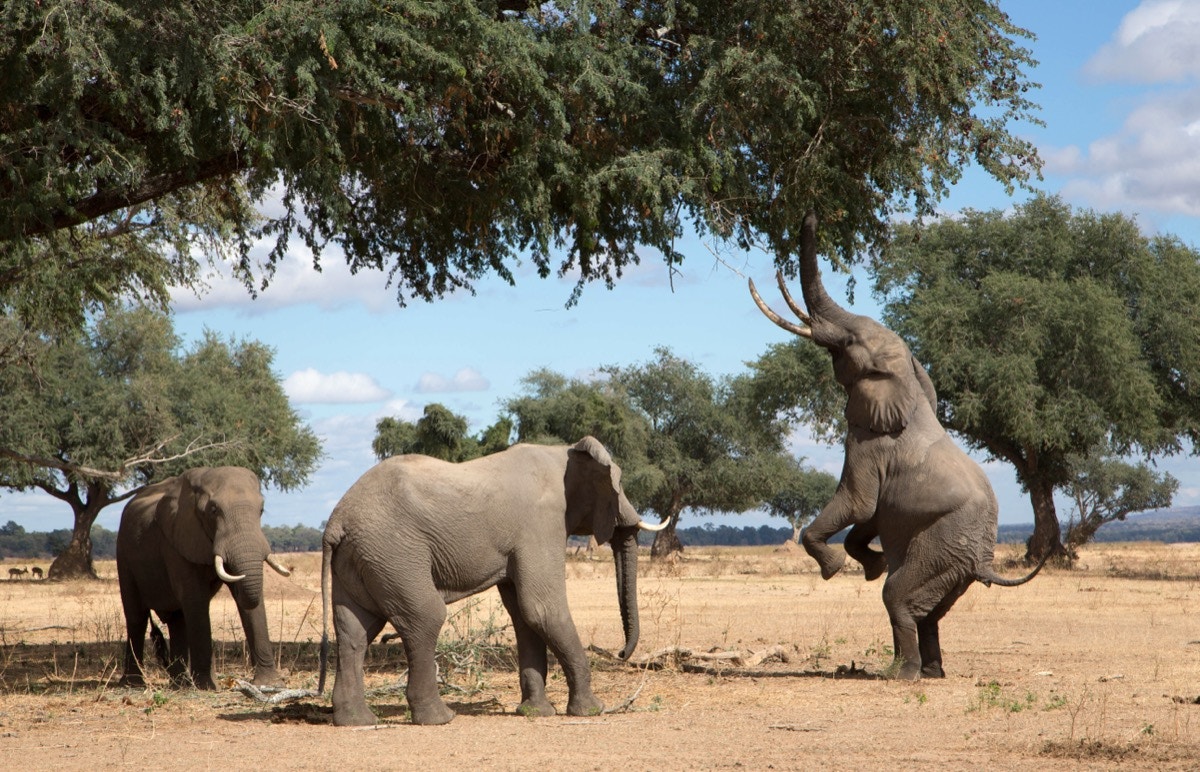
* **Unique wildlife behaviors**: Famous for its "standing elephants" that stretch to reach high tree branches
* **Canoeing safaris**: Multi-day adventures paddling along the Zambezi River
* **Exceptional guides**: Some of Zimbabwe's most highly qualified guides operate in Mana Pools
## Wildlife Experience
### Iconic Species
Mana's elephants are famous for standing on their hind legs to reach high branches. The legendary bull elephants like "Boswell" have passed this behavior to younger generations.
One of Africa's best places to observe endangered African wild dogs, with several successful packs within the park.
Healthy populations of lions and leopards, with the open woodland offering excellent visibility for predator sightings.
Abundant in the Zambezi River and pools, sometimes numbering in the hundreds at prime locations.
In addition, look for buffalo herds, numerous antelope species (including the majestic greater kudu), zebras, and over 350 bird species.
### Wildlife Viewing Areas
The most accessible and popular area featuring:
* Lush albida woodland attracting elephants, baboons, and impala
* Permanent pools with hippos and waterbirds
* High densities of predators following prey concentrations
* Most camps and picnic sites located in this zone
Moving away from the river:
* More open grassland with scattered trees
* Good for cheetah sightings
* Large buffalo and zebra herds
* Requires 4x4 vehicle to access most areas
A remote southern section of the park:
* Dramatic dry riverbed with underground springs
* Famous for intense predator-prey interactions
* Not for the faint-hearted; camping here puts you in the middle of wildlife action
* Limited facilities and high level of self-sufficiency required
## Safari Activities
### Walking Safaris
Mana Pools is Zimbabwe's premier destination for walking safaris:
**Guided Walks:**
* Led by highly qualified professional guides with firearms
* Option for short morning walks or full-day expeditions
* Focus on tracking predators and approaching elephants safely
* Small groups (maximum 6-8 people) for optimal experience
**Self-Guided Walking (for experienced visitors):**
* Unique opportunity for independent exploration
* Requires signing indemnity forms and demonstrating adequate experience
* Stay within designated areas (usually riverfront zone)
* Strict safety protocols must be followed
**Safety Note:** Walking safaris involve inherent risks. Always follow guide instructions precisely and maintain appropriate distances from wildlife.
### Canoe Safaris
Paddling the Zambezi offers an unforgettable perspective:
**Day Trips:**
* 3-5 hour guided excursions with operators from main camps
* No previous experience necessary
* Excellent for close hippo and crocodile viewing
* Beautiful riverside scenery and birding
**Multi-Day Expeditions:**
* 2-5 day supported trips camping on islands or mainland
* Professional guides manage safety around river wildlife
* All equipment and catering provided by operators
* Paddling between 10-20 km per day at relaxed pace
* Extraordinary way to experience the Zambezi ecosystem
**Popular Operators:**
* Mana Canoe Trails
* African Bush Camps
* Natureways Safaris
### Game Drives
Traditional safari game drives explore areas less accessible on foot:
* Typically conducted in early morning and late afternoon
* Open vehicles for optimal visibility
* Access to inland areas away from river
* Night drives permitted when staying at private concessions
* Opportunity to cover more ground than walking safaris
**Note:** Some remote areas require experienced 4x4 driving skills and often two-vehicle convoys for safety.
## Where to Stay
Mana Pools offers accommodations across various budgets and styles:
### Fixed Camps & Lodges
* Chikwenya Camp
* Nyamatusi Camp
* Little Ruckomechi
* Mana Pools Safari Lodge
* Wilderness Zambezi Expeditions
* John's Camp
* ZIMPARKS Main Camp
* Nyamepi Campsite
* Gwaya Campsite
### Mobile & Seasonal Camps
Several operators offer seasonal tented camps that combine comfort with an authentic wilderness experience:
* **African Bush Camps**: Seasonal Kanga Camp in the inland section
* **Goliath Safaris**: Famous operation run by legendary guide Stretch Ferreira
* **Natureways Safaris**: Mobile canoe safari camps along the Zambezi
These camps typically operate from May to November during the dry season.
### Self-Catering & Camping
For independent travelers, options include:
* **Exclusive Campsites**: Private riverside sites (Ndungu, Mucheni, Nkupe) offering isolation and prime locations
* **Public Campsite**: Nyamepi Campsite near the main gate with basic facilities
* **Chitake Springs Campsite**: Remote, unfenced wilderness camping for the adventurous
* **Undeveloped Bush Camps**: Available in certain areas for experienced safari-goers
**Note:** All camping requires advance booking through Zimbabwe Parks (ZIMPARKS) and bringing all supplies, as no shops exist in the park.
## When to Visit
The dry winter months offer exceptional wildlife viewing:
* Wildlife concentrates around remaining water sources
* Vegetation is sparse, improving visibility
* Comfortable daytime temperatures (though October can be extremely hot)
* Road conditions at their best
* Peak season pricing and limited availability
* Highest chance of seeing "standing elephants"
**Best for**: Wildlife enthusiasts, photographers, first-time visitors
The transitional months offer good conditions with fewer visitors:
* May-June: Still green but drying, pleasant temperatures
* November: Very hot but dramatic with storm clouds and first rains
* Wildlife viewing still productive
* Better availability and sometimes lower rates
* November brings dramatic skies excellent for photography
**Best for**: Value-conscious travelers, photographers, returning visitors
The summer rainy season presents challenges but unique rewards:
* Lush, green landscapes with dramatic skies
* Many animals with offspring
* Excellent birdwatching with migratory species present
* Limited accessibility (many roads impassable)
* Most camps closed; primarily self-drive camping available
* Lower rates but higher risk of disrupted plans due to weather
**Best for**: Adventurous travelers, bird enthusiasts, landscape photographers
Mana Pools National Park is completely **closed in January and February** due to heavy rains making roads impassable. Some operators begin their season in April, though most open in May.
## Practical Information
**Minimum**: 3 nights
**Recommended**: 4-5 nights to experience different activities
**Ideal**: 7+ nights for a comprehensive wilderness experience
* **By road**: 4-5 hour drive from Kariba or 10-12 hours from Harare (4x4 recommended)
* **By air**: Charter flights to Mana Main airstrip from Harare or Kariba
* **Combined access**: Many visitors fly in and drive out (or vice versa)
* Neutral-colored clothing (greens, browns, khaki)
* Long sleeves and pants for sun protection and evening insects
* Good walking shoes/boots for walking safaris
* Wide-brimmed hat and high SPF sunscreen
* Binoculars and camera with zoom lens
* Headlamp/flashlight for camp
* Insect repellent and malaria prophylaxis
* Basic first aid kit
* Park entrance: \$20 USD per person per day for international visitors
* Vehicle fee: \$10 USD per day
* Camping fees: \$10-50 USD depending on site exclusivity
* Fees payable at entrance gate in USD cash
## Conservation Challenges
Mana Pools faces several conservation issues:
* **Climate change**: Altering seasonal patterns and water availability
* **Poaching pressure**: Particularly on elephant and other valuable species
* **Balancing tourism**: Maintaining wilderness character while allowing access
* **Human-wildlife conflict**: In surrounding communal areas
Many lodges contribute to conservation and anti-poaching initiatives. Ask about their projects and how you can support them during your stay.
***
**Wilderness Safety**: Mana Pools is a true wilderness with inherent risks. Wildlife moves freely through all areas, including camps. Always maintain awareness, follow safety briefings, and if self-driving or walking independently, ensure you have sufficient experience and knowledge of wildlife behavior.
 Mana Pools National Park is a remote wilderness sanctuary along the Zambezi River in northern Zimbabwe. This UNESCO World Heritage site and core of a larger biosphere reserve encompasses 2,196 square kilometers (848 square miles) of floodplains, riverine forests, and baobab-studded savanna.
The name "Mana" means "four" in the local Shona language, referring to the four main pools (Long, Chine, Chisambuk, and Mana) that remain from ancient river channels. These permanent water sources attract incredible concentrations of wildlife, especially during the dry season.
Mana Pools National Park is a remote wilderness sanctuary along the Zambezi River in northern Zimbabwe. This UNESCO World Heritage site and core of a larger biosphere reserve encompasses 2,196 square kilometers (848 square miles) of floodplains, riverine forests, and baobab-studded savanna.
The name "Mana" means "four" in the local Shona language, referring to the four main pools (Long, Chine, Chisambuk, and Mana) that remain from ancient river channels. These permanent water sources attract incredible concentrations of wildlife, especially during the dry season.