> ## Documentation Index
> Fetch the complete documentation index at: https://travel-info.co.zw/llms.txt
> Use this file to discover all available pages before exploring further.
# Matobo Hills
> Explore Matobo Hills National Park with its balancing granite boulders, ancient San rock art, black eagle colonies, and rhino tracking near Bulawayo.
export const LocationMap = ({lat, lng, zoom = 12, title = "Location", showMarker = true, height = "400px"}) => {
if (!lat || !lng) {
return
;
};
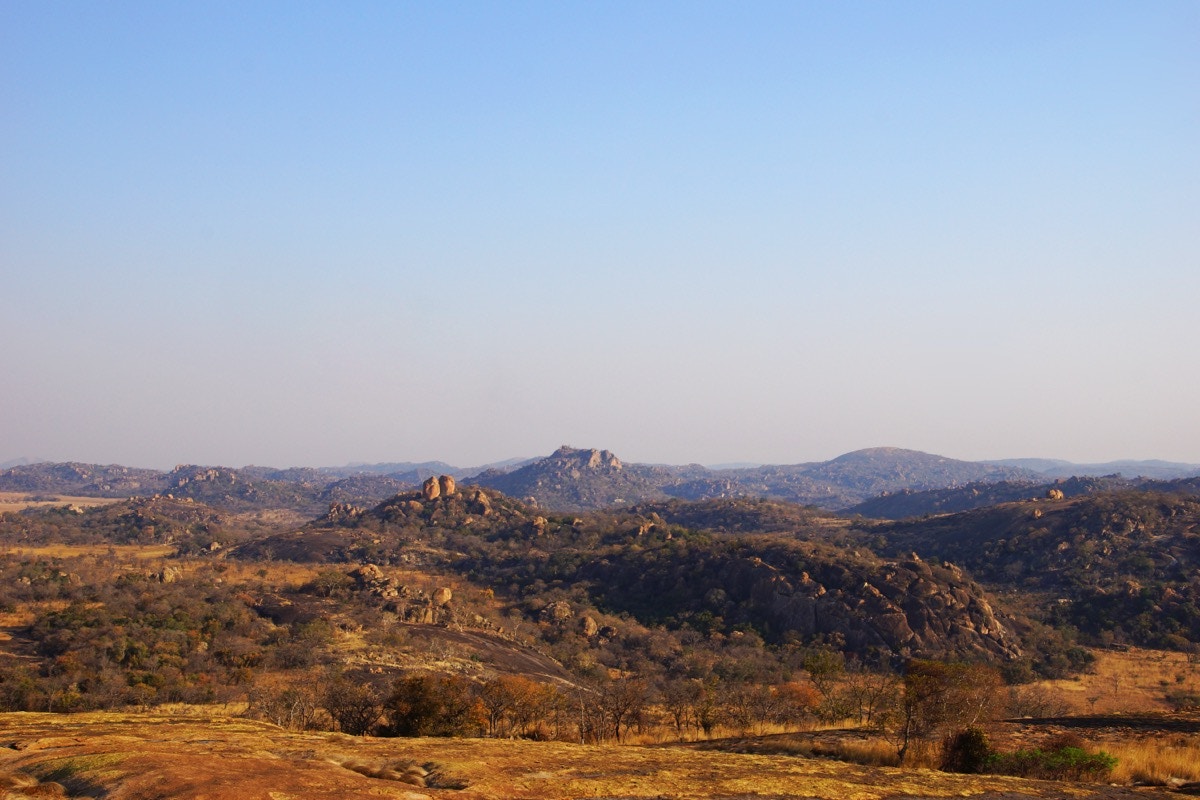
The Matobo Hills (also called Matopos) form a mystical landscape of balancing granite boulders, ancient rock paintings, sacred caves, and diverse wildlife just 35 kilometers south of Bulawayo. This UNESCO World Heritage site spans 3,100 square kilometers (1,200 square miles) and holds profound cultural, historical, and ecological significance.
## Why Visit Matobo Hills
Matobo offers a unique combination of experiences not found elsewhere in Zimbabwe:
* **Otherworldly landscape**: Dramatic granite domes and balanced rocks creating an almost surreal scenery
* **Cultural heritage**: One of the world's highest concentrations of rock art showcasing 13,000 years of human history
* **Wildlife viewing**: Exceptional rhino tracking opportunities and diverse birds of prey
* **Historical significance**: Cecil Rhodes' grave at "World's View" and connections to the Ndebele people's history
* **Spiritual importance**: Sacred sites still used by local communities for rainmaking ceremonies
* **Diverse activities**: From hiking and tracking to cultural tours and scenic picnics
## Key Attractions
### Remarkable Landscapes
The distinctive geological formations of Matobo were formed over 2 billion years ago, with granite weathering into extraordinary shapes:
* **Balancing Rocks**: Seemingly impossible natural formations with massive boulders perched precariously on others
* **"Mother and Child"**: The most famous balancing rock formation in the park
* **Silozwane Mountain**: Dramatic views across the landscape
* **Pomongwe caves**: Massive granite overhangs creating natural shelters
* **White Rhino Shelter**: Dramatic rock shelter with ancient paintings
These formations, called kopjes (pronounced "ko-pee"), are arranged in a sea of domes and valleys, creating a landscape unlike any other in Africa.
### Rock Art and Ancient History
Matobo contains over 3,000 documented rock art sites, with the highest concentration in southern Africa:
**Key Sites:**
* **Nswatugi Cave**: Some of the most well-preserved paintings showing hunting scenes and animals
* **White Rhino Shelter**: Remarkable depictions of rhinos and other wildlife
* **Silozwane Cave**: Dramatic ceiling paintings with large animal and human figures
* **Inanke Cave**: The most extensive painting site (difficult access requiring a guide)
* **Pomongwe Cave**: Evidence of human occupation dating back 100,000 years
The paintings primarily date from 13,000 BCE to 1500 CE and were created by San (Bushmen) hunter-gatherers. They depict wildlife, hunting scenes, dances, and spiritual ceremonies, providing insight into ancient cultures.
### Rhodes' Grave and Colonial History
The summit of Malindidzimu ("place of spirits") is known as World's View and contains the controversial grave of Cecil John Rhodes:
* Rhodes specifically requested burial at this dramatic viewpoint
* The site also contains the Shangani Patrol memorial, honoring colonial soldiers
* Offers spectacular 360-degree views across the park
* Site of reflection on Zimbabwe's colonial history and its complexities
**Note:** Rhodes was a polarizing figure—colonial businessman, politician, and founder of Rhodesia (now Zimbabwe and Zambia). Visits here provide opportunity for reflection on colonialism's impact and legacy.
### Wildlife
Matobo National Park hosts diverse wildlife in a compact, accessible area:
* **Rhinos**: One of Africa's most successful white rhino conservation programs
* **Leopards**: The highest density in Zimbabwe (though still elusive)
* **Antelope**: Sable, kudu, impala, klipspringer (rock specialists)
* **Black eagles**: Premier viewing site with numerous breeding pairs
* **Rock hyrax**: Small mammals that are distant relatives of elephants
* **Reptiles**: Diverse lizards and snakes adapted to the rocky environment
**Note:** Unlike other Zimbabwean parks, Matobo does not have elephants, lions, or buffalo in the main tourist areas, making it safe for walking activities.
## Activities
### Rhino Tracking
Matobo offers one of Africa's most reliable opportunities to see white rhinos on foot:
* Guided walking safaris with experienced armed rangers
* High success rate for encountering rhinos at close range
* Morning and afternoon tracking sessions available
* Group sizes usually limited to 8 people maximum
* Physical fitness required (moderate hiking involved)
* Safety briefing provided before approaching rhinos
* Remarkable photographic opportunities
**Booking**: Arrange through your accommodation or the park visitor center. Cost is approximately \$50-80 USD per person.
### Rock Art Tours
Explore the remarkable San rock paintings with knowledgeable guides:
* Half or full-day guided tours to key sites
* Interpretation of painting symbols and meanings
* Insights into San culture and spiritual beliefs
* Combined with scenic hiking through boulder fields
* Nswatugi and White Rhino Shelter most accessible for the average visitor
* Specialized rock art experts available for serious enthusiasts
**Note**: Some painting sites require scrambling over rocks and moderate fitness.
### Game Drives
Wildlife viewing in a unique rocky landscape:
* Park vehicles available for hire with guide
* Self-drive permitted on main roads
* Game-viewing loops through rhino conservation area
* Dawn and late afternoon optimal for wildlife sightings
* Focus on rhinos, leopards, antelope species, and birds of prey
* Whispering Stones area particularly productive for wildlife
**Tip**: Combine game drives with short walks to viewpoints for the complete Matobo experience.
### Historical Tours
Explore the complex colonial history and spiritual significance:
* Guided visits to World's View and Rhodes' grave
* Historical context from knowledgeable local guides
* Ndebele cultural history and resistance stories
* Connections to the 1896 rebellion and peace negotiations
* Optional extension to nearby Khami Ruins (another UNESCO site)
**Note**: The historical tours provide balanced perspectives on the colonial period and its impacts on local communities.
### Hiking and Photography
The unique landscape is perfect for walkers and photographers:
* Marked trails ranging from 1-5 hours
* Stunning viewpoints for landscape photography
* Dawn and dusk light creating dramatic shadows
* Specialized photographic guides available
* Self-guided options in designated safe areas
* Challenging terrain for adventurous scramblers
**Popular routes**:
* Pomongwe Circuit (2 hours)
* World's View Trail (1 hour)
* Maleme Dam Walk (3 hours)
## Where to Stay
### Inside/Near the Park
* Amalinda Lodge (in the park)
* Big Cave Camp (private concession)
* Matobo Hills Lodge (nearby)
* Hermits Peak
* Camp Amalinda
* Matopos Ingwe Lodge
* Matobo National Park Lodges
* Matobo Hills Campsite
* Farmhouse Lodge
### In Bulawayo (35km away)
The nearby city of Bulawayo offers additional accommodation options:
* Nesbitt Castle (colonial-era themed hotel)
* Bulawayo Club (historic member's club now open to guests)
* Cresta Churchill Hotel
* Various guesthouses and B\&Bs
Many visitors base themselves in Bulawayo and make day trips to Matobo.
## When to Visit
The most popular time to visit, offering:
* Clear, mild days and cool nights
* Excellent visibility for photography
* Easier hiking on dry terrain
* Better wildlife viewing as animals concentrate around water sources
* Particularly beautiful golden light in May-July
**Best for**: Wildlife viewing, hiking, photography
The summer rainy season offers different advantages:
* Dramatic storm clouds and lighting
* Lush green vegetation contrasting with the granite
* Fewer visitors and sometimes lower rates
* Temporary waterfalls and flowing streams enhancing the landscape
* Most afternoons experience short thunderstorms
**Best for**: Landscape photography, bird watching, budget travel
**Photography Tip**: The hours after rainfall in the wet season create exceptional conditions for photography when the granite rocks turn dark and reflective, contrasting with bright skies.
## Practical Information
**Minimum**: Full day visit from Bulawayo
**Recommended**: 2-3 days to experience different activities
**Ideal**: 3-4 days for in-depth exploration of rock art, wildlife, and landscapes
* **From Bulawayo**: 35 km (40-minute drive) on paved road
* **From Harare**: 440 km (5-hour drive)
* **From Victoria Falls**: 470 km (5.5-hour drive)
* **Public transport**: Limited options; hired vehicle recommended
* Comfortable walking shoes with good grip for rocky terrain
* Hat and sunscreen (limited shade in many areas)
* Camera with polarizing filter (helps reduce glare on rocks)
* Binoculars for wildlife and bird watching
* Water bottle and light snacks
* Light jacket/layer (mornings can be cool, especially May-August)
* National Park entrance: \$15 USD per person for international visitors
* Vehicle fee: \$5 USD
* Rhodes' Grave: Additional \$10 USD
* Fees payable at entrance gate in USD cash
* Activity fees (rhino tracking, guided tours) additional
## Cultural Sensitivity
Matobo remains a spiritually significant area for local communities:
* Some caves and rock formations are considered sacred sites
* Traditional ceremonies still take place in certain areas
* Respect signs indicating restricted sacred areas
* Photography may be restricted at particular sites
* Listen to guide instructions about appropriate behavior
**Rock Art Preservation**: Never touch rock paintings as oils from skin can damage them. Avoid using flash photography at rock art sites, and never wet the paintings to enhance colors (a destructive practice).
## Nearby Attractions
Combine your visit to Matobo with:
* **Bulawayo City**: Colonial architecture, Natural History Museum, and Railway Museum
* **Khami Ruins**: Another UNESCO World Heritage site 22 km west of Bulawayo
* **Chipangali Wildlife Orphanage**: Rehabilitation center for injured and orphaned animals
* **Plumtree and Mphoengs**: Traditional villages with insight into rural Zimbabwean life
***
## Explore Further
Detailed guide to Matobo's 3,000+ rock art sites, including the famous Nswatugi and Pomongwe caves, with visiting information and interpretation.
Visit one of Zimbabwe's most famous rock art sites featuring the iconic "swimming fish" panel and giraffes.
Explore evidence of 100,000 years of human occupation with exceptional paintings and archaeological significance.
Complete guide to this iconic viewpoint and Cecil Rhodes' burial site atop the Matobo Hills.
Learn about Zimbabwe's famous geological formations, with the finest examples found here in Matobo.
Discover the royal residence of the Torwa dynasty, Zimbabwe's lesser-known UNESCO World Heritage Site.
***
**Name Origins**: "Matobo" means "bald heads" in the Ndebele language, referring to the smooth, rounded granite domes that characterize the landscape. You may see both "Matobo" and "Matopos" used; the former is the more culturally accurate term.
 The Matobo Hills (also called Matopos) form a mystical landscape of balancing granite boulders, ancient rock paintings, sacred caves, and diverse wildlife just 35 kilometers south of Bulawayo. This UNESCO World Heritage site spans 3,100 square kilometers (1,200 square miles) and holds profound cultural, historical, and ecological significance.