

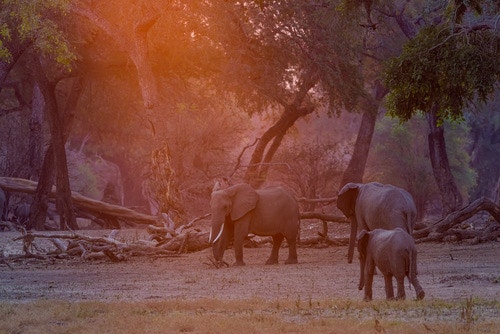
The Big Five
African Elephant
Population: ~82,000+ (one of Africa’s largest populations)Where to See: Hwange National Park (45,000+), Mana Pools, Gonarezhou, MatusadonaBest Time: Dry season (May-October) when they congregate at waterholesBehavior: Highly intelligent and social, living in matriarchal herds. Bulls often solitary or in bachelor groups. Can consume 150kg of vegetation daily.Safety: Maintain 30+ meter distance. Never position between mother and calf. Watch for ear flapping, trunk raising, and mock charges as warning signs.
Lion
Population: ~1,700-2,000 (stable and healthy)Where to See: Hwange, Mana Pools, Gonarezhou, Matobo HillsBest Time: Year-round, but easier to spot in dry season (June-October)Behavior: Social cats living in prides of 3-30 individuals. Primarily nocturnal hunters, but active at dawn and dusk. Males defend territory while females do most hunting.Viewing Tips: Look for them near waterholes at dawn and dusk. Listen for roaring at night. Tree-climbing lions can be seen in some areas.
Leopard
Population: ~2,000+ (elusive but widespread)Where to See: Mana Pools, Matobo Hills, Hwange, MatusadonaBest Time: Night drives (where permitted), early morning, late eveningBehavior: Solitary and nocturnal. Excellent climbers, often dragging prey into trees to protect from scavengers. Most adaptable of big cats.Viewing Tips: Scan tree branches for resting leopards or cached prey. Look for alarm calls from baboons and birds. Night drives offer best opportunities.
African Buffalo
Population: ~55,000+ across reservesWhere to See: Hwange, Mana Pools, Gonarezhou, ChizariraBest Time: Dry season at waterholes; wet season in large herdsBehavior: Live in herds of hundreds to thousands. Adult males may form bachelor groups or become solitary (“dagga boys”). Considered one of Africa’s most dangerous animals.Safety: Extremely dangerous when wounded or protecting calves. Keep distance of 50+ meters. Never approach solitary bulls.
Black & White Rhino
Population: Small but increasing (exact numbers kept confidential for anti-poaching)Where to See: Intensive Protection Zones in Mana Pools, Matobo Hills (white rhino walks available), private conservanciesConservation Status: Critically endangered (black), near threatened (white)Behavior: Black rhinos are browsers with hooked lips; white rhinos are grazers with square lips. Both have poor eyesight but excellent hearing and smell.Viewing: Rhino tracking walks available in Matobo Hills. Support anti-poaching efforts through responsible tourism.
Iconic African Wildlife
African Wild Dog (Painted Wolf)
African Wild Dog (Painted Wolf)
Population: ~700 (one of Africa’s largest populations)Where to See: Hwange, Mana Pools, Gonarezhou, MatusadonaConservation Status: EndangeredBehavior & Characteristics:
- Highly social, living in packs of 5-30 individuals
- 80% hunt success rate (highest of any large predator)
- Unique coat patterns - no two dogs look alike
- Democratic pack dynamics with alpha pair breeding
- Exceptional stamina - chase prey over long distances at 60+ km/h
- Cooperative hunters working in coordinated teams
- Incredibly devoted to pack members, including injured and elderly
- Most active dawn to mid-morning and late afternoon
- Denning season (May-August) offers best viewing
- Packs range over huge territories (400-1,500 km²)
- Look for radio collar monitoring by conservation teams
- Hwange has particularly habituated packs for viewing
- Main threats: habitat loss, human-wildlife conflict, disease from domestic dogs
- Zimbabwe hosts the Painted Dog Conservation center in Hwange
- Tourism directly supports anti-poaching and monitoring efforts
Cheetah
Cheetah
Population: Small but stable (~300-400)Where to See: Hwange (open grasslands), GonarezhouBehavior: Diurnal hunters (unlike most big cats), relying on explosive speed (110+ km/h) rather than stealth. Solitary females or male coalitions.Viewing Tips: Scan open plains during mid-morning and afternoon. Look for animals on termite mounds surveying for prey.Conservation: Listed as vulnerable. Zimbabwe’s dry, open areas provide ideal habitat.
Hippopotamus
Hippopotamus
Population: ~3,000-4,000Where to See: Zambezi River (Mana Pools, Victoria Falls), Lake Kariba, Gonarezhou riversBehavior:
- Spend days in water to keep cool, emerge at night to graze
- Highly territorial and dangerous on land
- Can weigh 1,500-4,000 kg
- Powerful jaws with tusks up to 50cm long
- Responsible for more human deaths in Africa than any other large animal
Nile Crocodile
Nile Crocodile
Population: Abundant in major river systemsWhere to See: Zambezi River, Lake Kariba, rivers in all major parksBehavior:
- Ambush predators that can wait motionless for hours
- Can grow to 5+ meters and live 70+ years
- Powerful bite force (3,700 psi)
- Regulates temperature by basking with mouth open
- Surprisingly fast on land over short distances
Giraffe
Giraffe
Population: ~30,000+Where to See: Hwange, Gonarezhou, Mana Pools, private reservesSub-species: Southern giraffe (Giraffa giraffa)Behavior:
- Tallest animals (up to 5.5m), allowing them to browse leaves other herbivores can’t reach
- Can go weeks without drinking due to moisture from acacia leaves
- Sleep only 4-5 hours daily in short naps
- Powerful kick can kill a lion
Plains Game
Plains Game
Impala (100,000+): Most abundant antelope. Impressive jumping ability (3m high, 10m long). Distinctive black stripes on rump and tail.Greater Kudu: Large antelope with spiral horns (males). Browser preferring woodland. Cautious and well-camouflaged.Sable Antelope: Magnificent with curved horns (both sexes). Dark coats, white facial markings. Prefer woodland savanna.Waterbuck: Large antelope with shaggy coat, white “target ring” on rump. Always near water. Strong odor.Wildebeest: Large herds in some parks. Distinctive appearance with ox-like horns and beard. Migratory in some areas.Zebra (Plains): Common throughout parks. Each has unique stripe pattern. Live in harems with single stallion.Warthog: Common. Characteristically run with tails upright. Kneel to feed on grass. Use abandoned burrows for shelter.
Primates
Primates
Baboon (Chacma): Largest primate in Zimbabwe. Highly intelligent and social. Common in all parks. Keep distance - can be aggressive, especially males.Vervet Monkey: Smaller, grey-green monkeys with black faces. Very agile and adaptable. Will steal food - keep camp secure.Samango Monkey: Rare forest-dwelling monkey. Found only in Eastern Highlands. Dark fur with distinctive white collar.Safety: Never feed primates. Keep food secured. Maintain distance. Males can be aggressive, especially protecting troop.
Hyena & Wild Cats
Hyena & Wild Cats
Spotted Hyena: Common. Powerful jaws can crush bone. Complex social structure with female dominance. Excellent hunters (not just scavengers). Eerie whooping calls at night.Serval: Medium-sized cat with long legs and large ears. Solitary and mainly nocturnal. Specialist rodent hunter in grasslands.Caracal: Reddish cat with distinctive ear tufts. Excellent jumper, can catch birds in flight. Mainly nocturnal and rarely seen.African Civet: Cat-like but not a true cat. Nocturnal omnivore. Look for it on night drives.
Birds of Zimbabwe
Zimbabwe is a premier birding destination with over 680 recorded species, including 27 endemics and near-endemics in southern Africa.Raptors & Birds of Prey
African Fish Eagle: Zimbabwe’s most iconic bird. Distinctive call (“the voice of Africa”). Common along Zambezi, Kariba, major rivers.Martial Eagle: Africa’s largest eagle. Powerful predator taking prey up to small antelope. Majestic in flight.Secretary Bird: Distinctive ground-dwelling raptor. Long legs, crest of black feathers. Stomps on snakes with powerful feet.Bateleur Eagle: Short-tailed, colorful eagle. Acrobatic flyer. Name means “tightrope walker” in French.Verreaux’s Eagle: Specializes in hunting rock hyrax. Common in Matobo Hills granite kopjes.Viewing: Mana Pools, Lake Kariba, Matobo Hills
Large Birds & Waterbirds
African Crowned Crane: Endangered. Distinctive golden crown, elegant dancer. Wetlands and grasslands.Saddle-billed Stork: Massive, colorful stork. Striking red, black, yellow bill. Rivers and wetlands.Goliath Heron: World’s largest heron (1.5m tall). Patient hunter in shallows.Pink-backed & White Pelican: Large flocks on Kariba and major rivers. Synchronized fishing behavior.African Spoonbill: Distinctive spatulate bill used to sweep through water for prey.Viewing: Lake Kariba, Zambezi River, wetlands in all parks
Colorful & Endemic Species
Lilac-breasted Roller: National bird. Stunning colors, acrobatic display flights during breeding.Carmine Bee-eater: Brilliant red-pink plumage. Large colonies nest in riverbanks (September-November, Mana Pools).Southern Ground Hornbill: Large black bird with red face and throat. Endangered. Cooperative breeding groups.Meyer’s Parrot: Small green parrot. Common in woodland. Breeding cavity nester.Purple-crested Turaco: Stunning purple and green. Eastern Highlands forests. Loud, distinctive call.Viewing: Widespread across parks, Eastern Highlands for forest species
Vultures
White-backed Vulture: Most common. Critically endangered. Essential ecosystem role.Lappet-faced Vulture: Largest, most powerful vulture. Can tear through tough hide.Hooded Vulture: Smallest, often last to feed at carcass.Conservation Crisis: Vulture populations declining dramatically due to poisoning, electrocution on power lines, and belief-based use.Why They Matter: Natural clean-up crew preventing disease spread. Indicator species for ecosystem health.Support: Report sightings, support anti-poisoning campaigns
Best Birding Locations & Seasons
- Prime Birding Parks
- Seasonal Birding
- Endemic & Special Species
Mana Pools National Park
- 450+ species recorded
- Carmine bee-eater colonies (Sep-Nov)
- Excellent raptors and waterbirds
- Canoe safaris ideal for birding
- 400+ species
- Excellent for raptors and large terrestrial birds
- Secretary birds in grasslands
- Waterholes attract diverse species
- Endemic and near-endemic forest species
- Chirinda Forest for Swynnerton’s Robin
- Roberts’ Prinia in montane grasslands
- 350+ species including rarities
- 350+ species
- Exceptional waterbird diversity
- African Fish Eagles abundant
- Houseboat birding safaris
- Unique spray forest habitat species
- Raptors riding thermals above gorges
- Taita Falcon (rare) in gorges
Reptiles & Amphibians
Snakes
Snakes
Zimbabwe hosts ~80 snake species, most harmless.Venomous Species to Know:
- Black Mamba: Highly venomous, fast, aggressive when cornered. Olive-brown body, black mouth interior. If encountered, back away slowly.
- Puff Adder: Responsible for most snake bites in Africa. Thick-bodied, sluggish, excellent camouflage. Watch where you step.
- Mozambique Spitting Cobra: Can spit venom 2-3 meters targeting eyes. Wear eye protection. If spat on, rinse eyes immediately.
- Boomslang: Tree-dwelling, rear-fanged. Rarely bites humans but venom is potent.
- African Rock Python (up to 5m, constrictor)
- Brown House Snake (common around lodges)
- Spotted Bush Snake (green, harmless)
- Watch where you place hands and feet
- Wear closed shoes on bush walks
- Check sleeping bags and boots
- Never attempt to catch or kill snakes
- Most bites occur when people try to handle snakes
Lizards & Other Reptiles
Lizards & Other Reptiles
Nile Monitor: Large lizard (1-2m). Semi-aquatic, excellent swimmer. Found near water. Can be aggressive if cornered.Rock Monitor: Terrestrial species in rocky areas. Slightly smaller than Nile monitor.Agamas: Colorful lizards common on rocks. Males develop brilliant blue and red colors during breeding.Geckos: Many species, including common house geckos. Harmless, eat insects. Welcome around lodges.Chameleons: Several species including large flap-necked chameleon. Slow-moving, color-changing. Often found crossing roads at night.Terrapins & Turtles: African helmeted terrapin common in rivers and pans. Nile soft-shelled turtle in major rivers.
Amphibians
Amphibians
Frogs: 60+ species, most active during rains.Notable Species:
- African Bullfrog (Giant Bullfrog) - huge, aggressive when breeding
- Reed Frogs - small, colorful, around water
- Various tree frogs in Eastern Highlands forests
- Rain Frogs - burrowing species that emerge after rains
Wildlife Viewing Tips & Etiquette
Best Viewing Practices
Timing:
- Early morning (sunrise-10am): Most animal activity
- Late afternoon/evening (4pm-sunset): Second peak activity period
- Midday: Animals rest in shade; good for birding
- Night drives: Nocturnal species (where permitted)
- Binoculars (8x42 or 10x42 recommended)
- Camera with telephoto lens (300mm+ ideal)
- Field guides for mammals and birds
- Notebook for logging sightings
- Neutral-colored clothing (khaki, green, brown)
- Be patient - sit at waterholes
- Look for movement and shapes, not whole animals
- Listen for alarm calls and rustling
- Scan tree branches for leopards and birds
- Check riverbanks for hippos and crocs
- Follow vulture activity to predator kills
Safety & Etiquette
Critical Safety Rules:
- Stay in vehicle unless at designated areas
- Maintain safe distances (see species guides above)
- Never feed animals
- No loud noises or sudden movements
- Keep windows mostly closed near lions
- Never drive between mother and offspring
- Follow guide instructions immediately
- Minimize time at sightings (especially predators with kills)
- Don’t surround animals with vehicles
- Allow animals right-of-way
- No off-road driving (damages habitat)
- Report injured animals to park officials
- Support anti-poaching through responsible tourism
- No flash near nocturnal animals
- Don’t use calls/sounds to attract wildlife
- Don’t alter environment for better shots
- Share sighting locations responsibly
- Respect animals’ space and behavior
Wildlife Identification Resources
Recommended Field Guides:- Newman’s Birds of Southern Africa - The definitive regional guide
- Mammals of Southern Africa by Chris & Tilde Stuart - Comprehensive mammal guide
- Beat About the Bush: Mammals - Excellent for safari-goers
- Snakes and Reptiles of East Africa - Good regional coverage
- Birding Apps: Roberts Bird App, Sasol eBirds, Merlin Bird ID
- Mammal Apps: African Wildlife App, Mammal Guide Southern Africa
- Track & Sign: iTrack Wildlife, African Animal Tracks
- BirdLife Zimbabwe
- Wildlife & Environment Zimbabwe (WEZ)
- African Wildlife Foundation - Zimbabwe
- Zimbabwe Parks & Wildlife Management Authority
Conservation Status & Threats
How You Can Help Conservation
1
Choose Responsible Operators
Select lodges and operators that contribute to conservation. Look for:
- Community partnerships
- Anti-poaching support
- Conservation levies
- Environmental certifications
2
Follow All Park Rules
Your compliance protects wildlife:
- Stay on designated roads
- Maintain safe distances
- No feeding or touching animals
- Take all trash with you
3
Support Conservation Organizations
- Painted Dog Conservation (Hwange)
- Zimbabwe Elephant Nursery
- BirdLife Zimbabwe
- African Wildlife Foundation - Zimbabwe
- Donate directly or buy conservation merchandise
4
Report Wildlife Crime
If you witness poaching, snaring, or wildlife crime:
- Report to park rangers immediately
- Note location, time, vehicle details if safe
- Contact Zimbabwe Parks & Wildlife Authority
- Tourism supports conservation - your vigilance matters
5
Share Responsibly
- Don’t reveal rhino sighting locations on social media
- Avoid real-time geotags in sensitive areas
- Educate others about conservation issues
- Share your positive conservation experiences
Planning Your Wildlife Safari
For comprehensive safari planning including best parks, accommodation, and itineraries, see our dedicated Safari Planning Guide. For national park details, visit National Parks & Reserves. To learn about Zimbabwe’s conservation initiatives, see Conservation Efforts.Have you encountered amazing wildlife in Zimbabwe? Share your sightings and experiences with fellow travelers! Last updated: January 2025